Quick Answer
To play Pokémon TCG, each player uses a 60-card deck of Pokémon, Energy and Trainer cards. You put one Pokémon in the Active Spot, up to five on your Bench, and set aside six Prize cards. On your turn you draw a card, attach one Energy, play Trainers, then attack. Each time you Knock Out an opponent’s Pokémon, you take Prize cards. Take all six Prize cards first and you win. The easiest way to learn is with a ready-to-play starter deck.
Lots of kids collect Pokémon cards for the artwork, but the cards are also a real game. Learning to play makes the hobby even more fun, and it is a great way for families to spend time together.
If you are a parent who has never played, do not worry. This guide explains how to play Pokémon TCG in plain language, one step at a time. You can read it together with your kids.
The Three Kinds of Cards
Every Pokémon card falls into one of three groups:
- Pokémon cards: The creatures that battle. Basic Pokémon can go into play right away. Stage 1 and Stage 2 Pokémon evolve from them.
- Energy cards: The power for attacks. Each attack shows Energy symbols that tell you what it needs.
- Trainer cards: Helpful cards like Items, Supporters, Stadiums and Pokémon Tools that let you draw cards, heal or search your deck.
What You Need to Play
- A 60-card deck for each player
- A coin or something to flip
- Damage counters or dice to track damage
- A flat table or play mat
Your deck can have no more than four copies of a card with the same name, except basic Energy cards. You do not need to build a deck from scratch to start. Starter decks and battle boxes come ready to play.
How to Set Up a Game
- Shake hands, shuffle your decks and flip a coin to see who goes first.
- Each player draws seven cards.
- Put one Basic Pokémon face down in your Active Spot. You may also put up to five more Basic Pokémon face down on your Bench. If you have no Basic Pokémon, show your hand, shuffle it back and draw a new seven cards.
- Each player sets aside the top six cards of their deck face down. These are your Prize cards.
- Flip your Pokémon face up and start playing.
What You Can Do on Your Turn
Start every turn by drawing one card. Then you can do any of these, in any order:
- Put Basic Pokémon from your hand onto your Bench (up to five Pokémon on your Bench).
- Evolve your Pokémon by placing a Stage 1 or Stage 2 card on top of the Pokémon it evolves from. You cannot evolve a Pokémon on the first turn it comes into play.
- Attach one Energy card from your hand to one of your Pokémon. Only one per turn.
- Play Trainer cards. You can play as many Item cards as you want, but only one Supporter per turn.
- Retreat your Active Pokémon once per turn by discarding the Energy shown as its Retreat Cost, then swap in a Pokémon from your Bench.
- Use Abilities on your Pokémon, if they have them.
When you are ready, attack. Attacking ends your turn. The player who goes first cannot attack or play a Supporter on their very first turn.
How Attacks and Damage Work
To attack, your Active Pokémon needs the Energy shown next to the attack. Put damage counters on your opponent’s Active Pokémon equal to the damage. Each damage counter equals 10 damage.
Check for Weakness and Resistance at the bottom of the defending Pokémon’s card. If it is weak to your Pokémon’s type, it usually takes double damage. Resistance lowers the damage.
When a Pokémon has damage equal to or greater than its HP, it is Knocked Out. It goes to the discard pile, and the attacking player takes Prize cards. Then the player whose Pokémon was Knocked Out moves a Pokémon from their Bench into the Active Spot.
How Many Prize Cards Do You Take?
- Most Pokémon: 1 Prize card
- Pokémon ex: 2 Prize cards
- Mega Evolution Pokémon ex: 3 Prize cards
Big Pokémon ex are powerful, but they give up more Prize cards when they are Knocked Out. Deciding when to use them is part of the strategy.
How to Win
You win the game if any one of these happens:
- You take all six of your Prize cards.
- Your opponent has no Pokémon left in play.
- Your opponent has no cards left in their deck at the start of their turn.
Special Conditions in a Nutshell
Some attacks leave a Pokémon Asleep, Burned, Confused, Paralyzed or Poisoned. These conditions can stop a Pokémon from attacking or retreating, or add damage between turns. They go away when the Pokémon moves to the Bench or evolves. Beginners can look these up as they come up. There is no need to memorize them on day one.
The Best Way for Beginners to Start
The easiest way to learn is to start with a deck that is ready to play. Two players can sit down with a starter deck each and learn as they go. After a few games, kids usually want to start changing their decks, and that is when building your own gets fun.
You can also practice for free on Pokémon TCG Live, the official digital game. It walks new players through the rules with tutorials. The official Pokémon TCG rules page has the full rulebook if you want every detail.
Many local game stores also run Pokémon League nights, where new players can learn from others in a friendly setting.
Collecting vs. Playing: Do You Have to Choose?
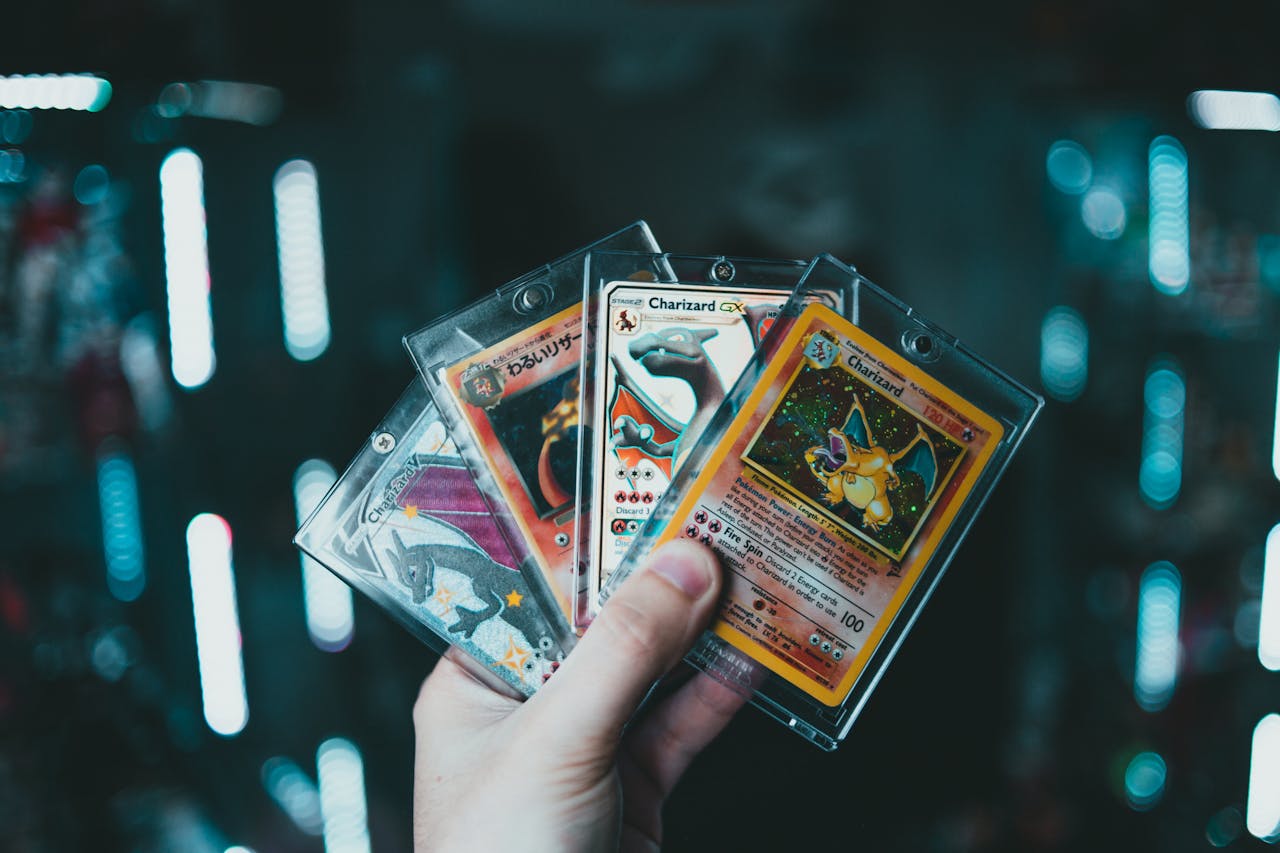
Not at all. Many families do both. Kids can play with everyday cards and keep their favorite pulls safe in sleeves and binders. If a card might be valuable, keep it out of play decks and store it in a top loader.
Want to know which cards are special? Our guide to Pokémon card rarity symbols explains what every circle, diamond and star means. And before you buy single cards online, read how to spot fake Pokémon cards.
What to Buy for a New Player
Packs and boxes are great for building a collection and finding new cards for your deck. Here are a few options on the Card Chase truck, at our truck prices before tax:
- Pokémon 12 Card Pack Holo Edition: $4.99
- Pokémon TCG Chaos Rising Booster Bundle: $39.99
- Pokémon TCG 30th Celebration Booster Bundle: $69.99
- Pokémon TCG 30th Celebration Elite Trainer Box: $125
Elite Trainer Boxes are a favorite for new players because they come with sleeves, Energy cards, dice and a storage box along with the packs. Not sure what to pick? Read ETB vs booster box and our parent’s guide to the best Pokémon cards for kids.
Order online in our shop or the free Card Chase App, then pick up at the Card Chase truck at any event within 30 days. Online orders are pickup only, and we do not ship. Bring your receipt and a photo ID that matches the name on the card you paid with. Find the truck on our events page.
Frequently Asked Questions
How many cards are in a Pokémon TCG deck?
A Pokémon TCG deck has exactly 60 cards. You can have no more than four copies of a card with the same name, except basic Energy cards.
How do you win a Pokémon card game?
You win by taking all six of your Prize cards, by Knocking Out all of your opponent’s Pokémon in play, or if your opponent cannot draw a card at the start of their turn.
How many Energy cards can you attach per turn?
You can attach one Energy card from your hand to one of your Pokémon each turn.
How many Prize cards is a Pokémon ex worth?
When a Pokémon ex is Knocked Out, the other player takes two Prize cards. A Mega Evolution Pokémon ex gives up three Prize cards.
What is the best way for kids to learn Pokémon TCG?
Start with ready-to-play starter decks so two players can learn together, then practice with the free Pokémon TCG Live app. Many local game stores also run beginner-friendly Pokémon League nights.

Written by
David Clemens · Co-Founder & Chief Brand Officer
David is a co-founder and Chief Brand Officer of Card Chase. He writes beginner guides, Pokémon content and posts for collecting families.