Quick Answer
To submit cards to PSA, create a free account on psacard.com, start a submission in PSA’s Online Submission Center, enter each card and its declared value, and choose a service level. Then print your submission form, pack your cards safely in sleeves and semi-rigid holders, and ship them to PSA with the label from your submission. You do not need a paid membership to submit, and PSA asks for payment when grading is completed.
You pulled a great card, and now you want it in a slab. Grading can protect a card, confirm it is authentic and give it a clear condition grade that buyers trust. PSA is the biggest name in card grading, and its process is easier than it looks once you have done it once.
This guide walks you through how to submit cards to PSA, step by step, in plain language. PSA updates its services and prices from time to time, so always double-check the details on the PSA website before you send anything.
Step 1: Decide Which Cards Are Worth Grading
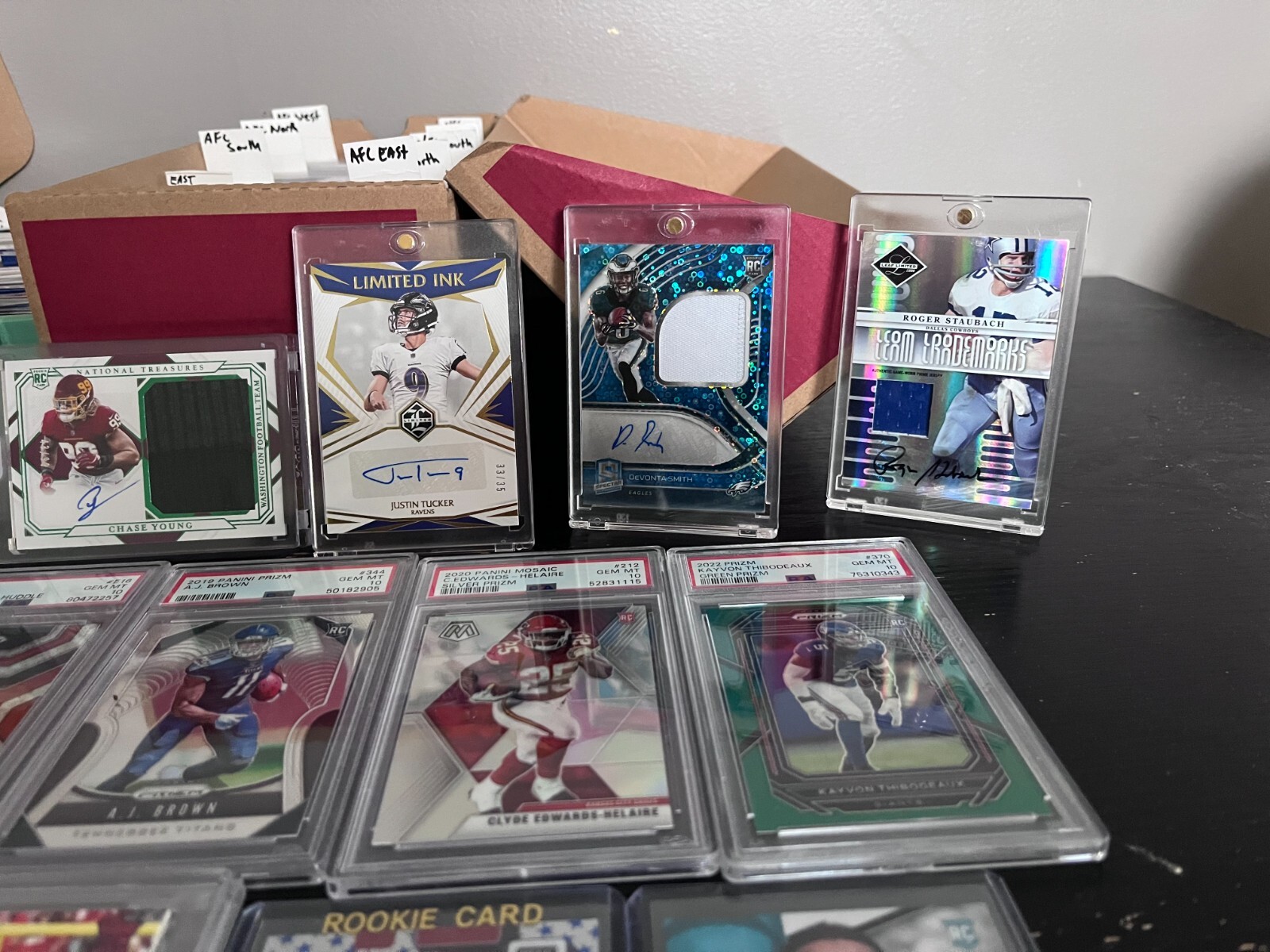
Grading costs money and takes time, so not every card should go in. In general, it makes the most sense for:
- Rookie cards and key cards of popular players
- Autographs and low-numbered parallels
- Pokémon chase cards like Special Illustration Rares
- Vintage cards, where authentication matters
- Cards with real sentimental value to you
Before you submit, look up recent sold prices for your card in graded and ungraded form. Our guides on which cards are worth grading and how to look up card values show you how.
Step 2: Check Your Card’s Condition
Grading companies look closely at four things: centering, corners, edges and surface. Before you submit, check each card under a bright light:
- Centering: Are the borders even on all four sides?
- Corners: Are they sharp, or soft and rounded?
- Edges: Any chipping, nicks or white spots?
- Surface: Any scratches, print lines, dents or fingerprints?
A card with a visible flaw will not get a top grade, no matter how valuable it is. Being honest with yourself here saves money. If you are still deciding between graders, our PSA vs BGS vs SGC guide compares the big three.
Step 3: Create a PSA Account
Go to PSA’s trading card grading page and create a free account. According to PSA, you do not need to join its paid Collectors Club to submit cards. The club is optional and adds perks, but plenty of collectors submit without it.
Step 4: Start a Submission in the Online Submission Center
PSA handles submissions through its Online Submission Center. You will:
- Choose the type of service, such as grading for trading cards.
- Choose how to submit. PSA’s Assisted Submission picks a service level for you based on your card’s estimated value, while Classic Submission lets you choose yourself.
- Enter each card: year, brand, set, card number and player or Pokémon name.
- Enter a declared value for each card.
- Review your order and check out.
Be careful when you enter card details. Small mistakes, like the wrong card number or parallel, can slow things down.
Step 5: Choose a Service Level
PSA offers several service levels, with names like Economy, Regular, Express and Super Express, plus higher tiers for very valuable cards. Faster service costs more. Each level also has a maximum declared value, so a high-value card must go in a higher, more expensive tier.
Prices and turnaround times change, so check PSA’s current pricing page right before you submit. Turnaround is estimated in business days and is not guaranteed.
Step 6: Set an Honest Declared Value
The declared value is what you believe the card will be worth after grading. It decides which service level you need and how your card is covered while PSA has it. Use recent sold prices for that card in the grade you expect, not the highest asking price you can find. Being realistic keeps your card in the right tier and avoids surprises later.
Step 7: Pack Your Cards Safely
How you pack matters. Follow PSA’s packing guidelines on its website. Here is how many collectors pack a submission:
- Put each card in a clean penny sleeve.
- Slide the sleeved card into a semi-rigid holder, such as a Card Saver I. Many collectors avoid screw-down holders because they are harder to open safely.
- Stack the holders in the same order as your submission form.
- Sandwich the stack between pieces of cardboard and secure it with rubber bands, without bending the cards.
- Place the stack and your printed submission form in a sturdy box with padding so nothing slides around.
Our guide on how to protect sports cards explains the difference between sleeves, top loaders and semi-rigid holders.
Step 8: Ship Your Cards to PSA
After checkout, PSA gives you shipping instructions and the address to use. Use a trackable, insured shipping method, and keep your tracking number. PSA sends status updates by email, and you can follow your order through each step in your PSA account.
Step 9: Wait, Pay and Get Your Cards Back
Your order moves through stages like arrival, research, grading and quality checks. PSA says payment is requested when grading is completed, so you pay once your grades are ready. After that, PSA ships your slabbed cards back to you. When they arrive, check each slab and the label before you store them.
Should You Grade Pokémon Cards Too?
Yes, PSA grades Pokémon cards the same way it grades sports cards, and the steps above work for both. Pokémon cards are especially sensitive to surface scratches and whitening on the back edges, so look closely before you submit. If you are grading a high-end Pokémon card, make sure it is the real thing first. Our guide to spotting fake Pokémon cards covers the key checks.
Common Mistakes First-Time Submitters Make
- Submitting cards with obvious flaws. Check every card under good light first.
- Choosing the wrong service level. Match the tier to each card’s declared value.
- Packing too loosely or too tightly. Cards should not move, but they should not be squeezed.
- Using screw-down holders or tape on holders. These make it harder to remove your cards safely.
- Rushing card details. Double-check every year, set and card number.
Find Cards Worth Grading at the Card Chase Truck
Card Chase is Ohio’s first mobile sports card and Pokémon card truck, serving Cincinnati, Dayton and Columbus. The best grading story starts with a great pull, and the truck is a fun place to rip. Buy at the window, or order online and pick up at the truck at any event within 30 days with your receipt and a matching photo ID. Sleeve your best pulls right away so they stay in grading shape.
Check the free Card Chase App for box scores, and find our next stop on the events page.
Frequently Asked Questions
How do I submit cards to PSA for the first time?
Create a free account on psacard.com, start a submission in the Online Submission Center, enter each card and its declared value, choose a service level, then pack your cards and ship them to PSA using the instructions from your submission.
Do I need a membership to submit cards to PSA?
No. PSA says you do not need to join its Collectors Club to submit cards. The paid club is optional.
How should I pack cards for PSA?
Put each card in a penny sleeve, then in a semi-rigid holder like a Card Saver I. Stack them in submission order, protect the stack with cardboard and pack it snugly in a padded box. Follow PSA’s packing guidelines for current details.
When do I pay for PSA grading?
PSA says payment is requested when grading is completed.
What is declared value on a PSA submission?
Declared value is what you believe your card will be worth after it is graded. It determines your service level, so use recent sold prices for that card in the grade you expect.
How long does PSA grading take?
It depends on the service level. PSA posts current estimated turnaround times in business days on its pricing page, and faster service levels cost more.

Written by
David Clemens · Co-Founder & Chief Brand Officer
David is a co-founder and Chief Brand Officer of Card Chase. He writes beginner guides, Pokémon content and posts for collecting families.