Quick Answer
New to the hobby? These are the sports card terms you’ll hear most: RC (rookie card), SP and SSP (short print and super short print), parallel (a colored version of a card), 1/1 (only one copy exists), auto (autograph), relic or patch (a piece of jersey), RPA (rookie patch autograph), hit (a special card), raw (ungraded), slab (a graded card’s holder) and rip (to open packs). The full A to Z glossary is below.
Walk up to any card show, truck window or group break and you’ll hear people talking in what sounds like code. “Pulled an SSP and an RPA out of a hobby box, but my 1/1 was a redemption.” If that sentence made no sense, you’re in the right place.
This glossary covers 80 of the most common hobby terms, from 1/1 to wax, in plain language. Jump to a letter below, or bookmark this page and come back any time you hear a word you don’t know. It works for sports cards and Pokémon alike.
Numbers
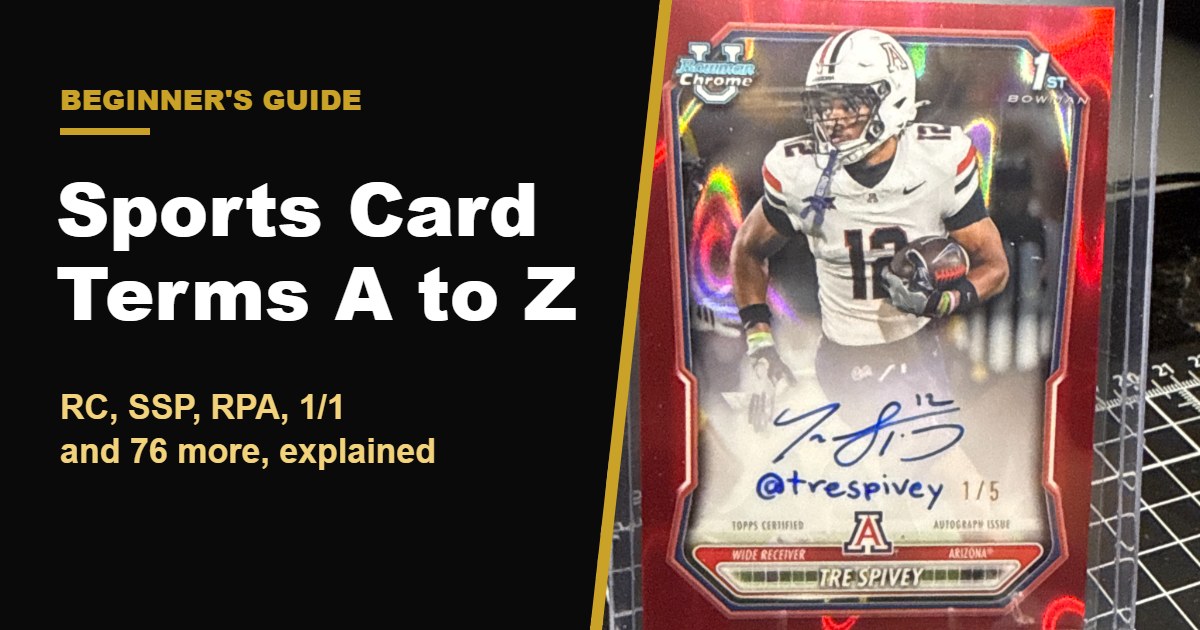
- 1/1 (One of One): A card with only one copy in existence, usually stamped 1/1. The rarest card you can pull.
- 1st Bowman: A player’s first card in a Bowman product, marked with a “1st” logo. Prospect collectors chase these, especially in Bowman Chrome.
A
- Autograph (Auto): A card signed by the player. Certified autographs are guaranteed authentic by the card company.
- Alternate (Alt): A different version of the same card, such as an alternate photo or design.
B
- Base card: The standard, most common version of a card in a set.
- Base set: The full run of standard cards in a product, numbered 1 through the last card.
- BGS: Beckett Grading Services, a major card grading company known for subgrades and its Black Label 10.
- Black Label: A BGS 10 grade with perfect 10 subgrades on centering, corners, edges and surface.
- Blaster box: A retail box sold at big-box stores, usually 5 to 8 packs with a few retail-exclusive parallels or inserts.
- Booster pack: A sealed pack of Pokémon cards, usually 10 cards with at least one foil card.
- Box topper: A bonus card or pack that sits on top of the packs in a box.
- Break: When a group of collectors split the cost of a box or case and get the cards for their team or player, often opened live online.
C
- Case: A sealed shipping box of several hobby or retail boxes, straight from the manufacturer.
- Case hit: A card so rare it averages about one per case.
- Centering: How even the borders are on the front and back of a card. Off-center cards grade lower.
- Checklist: The complete list of cards in a set, including inserts, parallels and autographs.
- Chrome: A shiny, metallic card stock used in Topps Chrome and Bowman Chrome. Chrome rookies are some of the most collected modern cards.
- Comp: A comparable sale. Collectors look at recent comps to figure out what a card is worth.
- Crease: A fold or bend in a card. Even a small crease drops value a lot.
D
- Die-cut: A card cut into a special shape instead of a standard rectangle.
- Dual autograph: A card signed by two players.
E
- Elite Trainer Box (ETB): A Pokémon product with booster packs, sleeves, Energy cards, dice and a storage box, often with a promo card.
- Error card: A card printed with a mistake, like a wrong photo or stat. Some famous errors are valuable.
- Exclusive: A card or parallel found only in one format, like a blaster-exclusive or Mega-exclusive parallel.
F
- Fat pack: A retail pack with more cards than a standard pack.
- First Off The Line (FOTL): A limited, early release of a hobby product with exclusive parallels.
- Flagship: A brand’s main yearly set, like Topps Series 1 or Topps Flagship Football.
- Full art: A Pokémon card where the artwork covers the whole card.
G
- Gem Mint: A near-perfect card. A PSA 10 is labeled Gem Mint.
- Grade: A number, usually 1 to 10, that a grading company gives a card based on its condition.
- Graded card: A card that has been graded and sealed in a plastic holder, also called a slab.
H
- Hanger box: A retail box that hangs on a peg, usually one big pack.
- Hit: A special card like an autograph, relic or low-numbered parallel. Hobby boxes often guarantee a certain number of hits.
- Hobby box: A box sold through hobby shops and online stores, usually with guaranteed hits and hobby-only parallels.
- Holo: Short for holographic. A shiny, foil card, common in Pokémon.
I
- Image variation: A version of a card with a different photo than the base card, often short printed.
- Insert: A special card that isn’t part of the base set, usually with its own theme and design.
J
- Jersey card: A card with a piece of a player’s jersey embedded in it. A type of relic.
- Jumbo box: A larger hobby box with more cards and often more hits per box.
- Junk wax: Cards from about 1987 to 1994, printed in such huge numbers that most are worth very little today.
L
- LCS: Local card shop.
- Logoman: A rare patch card featuring the league logo patch from a game jersey.
- Lot: A group of cards sold together.
M
- Mega box: A retail box with more cards than a blaster and often Mega-exclusive parallels.
- Memorabilia (Mem): Any card with a piece of game-used or event-worn material, like a jersey, patch or bat.
- Mojo: A Bowman Chrome refractor pattern. Mega Box Chrome cards are often Mega-only Mojo Refractors.
N
- Numbered card: A card stamped with a serial number, like 25/99, showing how many copies exist.
- Near Mint (NM): A card in excellent condition with only tiny flaws.
O
- Odds: The chance of pulling a certain card, like 1 in 24 packs, printed on the wrapper or the company’s website.
- On-card autograph: A signature written directly on the card, which most collectors prefer over a sticker auto.
P
- Pack: A sealed package of cards.
- Parallel: A version of a base or insert card with a different color, finish or pattern, often numbered.
- Patch: A relic card with a multicolor piece of a jersey, like part of a number or logo.
- PC: Personal collection. Cards a collector keeps instead of selling or trading.
- Pop report: A grading company’s count of how many copies of a card have received each grade.
- Print run: How many copies of a card were made.
- Prizm: Panini’s popular chromium brand, known for its colorful Prizm parallels.
- Prospect card: A card of a player who hasn’t reached the pros yet, like a Bowman prospect or college card. It’s not a rookie card.
- PSA: Professional Sports Authenticator, the largest card grading company.
R
- Rainbow: A full run of every color parallel of one card.
- Raw: A card that hasn’t been graded.
- RC (Rookie Card): A player’s official first-year card, marked with an RC logo. Usually a player’s most collected card.
- Redemption: A card you send in or redeem online to receive a card that wasn’t ready when the product was packed.
- Refractor: A Chrome card with a rainbow shine when you tilt it. Colored refractors are often numbered.
- Relic: A card with a piece of game-used or player-worn material.
- Retail: Products sold at big-box stores, like blasters, megas, hangers and value boxes.
- Rip: To open packs. “Let’s rip a box” means let’s open it.
- RPA: Rookie patch autograph. A rookie card with both a patch and an autograph, one of the top modern chases.
S
- SGC: Sportscard Guaranty, a grading company known for its black-label slabs.
- Short print (SP): A card printed in smaller numbers than the base set.
- Super short print (SSP): A card printed in even smaller numbers than a short print.
- Singles: Individual cards bought or sold one at a time, instead of in packs.
- Slab: The hard plastic holder a graded card is sealed in.
- Sticker auto: An autograph signed on a clear sticker and placed on the card.
- Superfractor: A 1/1 gold refractor in Topps Chrome and Bowman Chrome, one of the most famous chase cards.
T
- Top loader: A rigid plastic holder that protects a sleeved card.
- Trade: Swapping cards with another collector instead of buying or selling.
V
- Value box: A lower-priced retail box, a good starter box for new collectors.
- Variation: A card that looks different from the base card, like a photo or color change.
W
- Wax: Slang for sealed packs and boxes, from the wax paper packs of decades ago.
Put the words to work
Now that you know the language, learn how to use it. Our guides cover hobby vs blaster vs mega boxes, how to protect your cards, which cards are worth grading and how much your cards are worth.
Learn the Hobby at the Card Chase Truck
The easiest way to learn card lingo is to hang out with collectors. The Card Chase truck sets up at card shows and events around Cincinnati, Dayton and Columbus, and we’re always happy to explain the difference between a blaster and a hobby box or help you figure out what you just pulled. We sell sealed sports cards and Pokémon in person at the window. See what’s on the truck, check our box scores in the free Card Chase App, and find our next stop on the events page.
Frequently Asked Questions
What does RC mean on a sports card?
RC stands for rookie card. It marks a player’s official first-year card and is usually the most collected card of a player’s career.
What is the difference between an SP and an SSP?
An SP (short print) is printed in smaller numbers than the base set. An SSP (super short print) is printed in even smaller numbers, so it’s harder to pull.
What is a hit in sports cards?
A hit is a special card like an autograph, a relic or a low-numbered parallel. Many hobby boxes guarantee one or more hits per box.
What does raw mean for a card?
A raw card is one that hasn’t been graded or sealed in a slab by a grading company.
What is the difference between a parallel and an insert?
A parallel is a different-colored or different-finish version of a base or insert card. An insert is a separate themed card that isn’t part of the base set.
What does rip mean in the card hobby?
To rip is to open packs or boxes. Ripping at the Card Chase truck means buying a box at the window and opening it on the spot.

Written by
David Clemens · Co-Founder & Chief Brand Officer
David is a co-founder and Chief Brand Officer of Card Chase. He writes beginner guides, Pokémon content and posts for collecting families.

