Quick Answer
To sell sports cards, first sort out the few cards worth real money, then look up sold listings (not asking prices) to learn what each one actually sells for. Sell higher-value cards one at a time on a marketplace like eBay or at a card show, consider grading only the cards where a slab clearly adds value, and sell common cards in bulk lots. Protect every card in a sleeve and top loader before you ship or show it.
Maybe you just cleaned out a closet and found a shoebox of cards. Maybe your kid has moved on from the hobby. Or maybe you’ve been collecting for years and want to trim your collection so you can chase something new. Whatever the reason, selling cards can feel confusing the first time.
The good news is that it’s not hard once you know the steps. This guide walks you through how to sell sports cards from start to finish: sorting, pricing, picking where to sell, grading, shipping and avoiding scams. It’s written for beginners and parents, so we keep it simple.
Step 1: Sort Your Cards First
Before you think about where to sell, figure out what you have. Most collections are mostly common base cards with a few cards that matter. Your job is to find those few cards.
Lay your cards out and pull these into a separate “check first” pile:
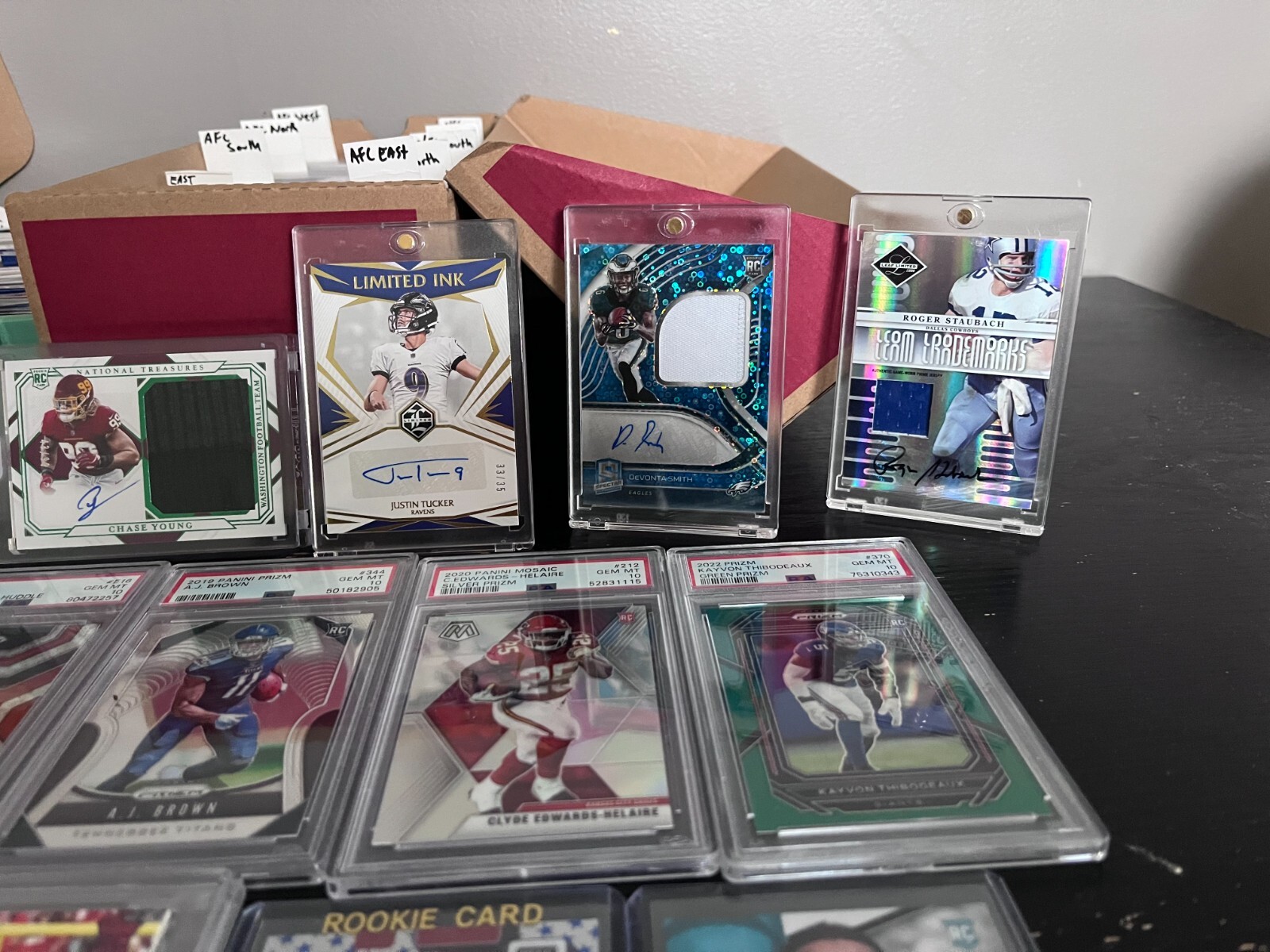
- Rookie cards, especially ones with an RC logo
- Serial-numbered cards, like /99 or /25 stamped on the front or back
- Autographs and memorabilia cards with a piece of jersey or patch
- Parallels and refractors that look different from the base version
- Star players and Hall of Famers
- Older vintage cards from the 1950s, 60s and 70s
If some of those words are new to you, our guide to parallel cards and our A to Z glossary of sports card terms explain them in plain language.
Everything else, the base cards of everyday players, goes into a “bulk” pile. Bulk still has some value, but it sells very differently, which we cover below.
Step 2: Find Out What Your Cards Actually Sell For
This is the step people skip, and it’s the one that matters most. A card is worth what buyers have recently paid for it, not what a seller is asking.
The best free tool is eBay’s sold listings. Search the exact card (year, set, player, card number and parallel), then filter to “Sold Items.” Look at several recent sales of the same card in the same condition. Our full walkthrough on how to look up what your sports cards are worth shows you exactly how to do this, along with other price tools collectors use.
A few tips that save people a lot of frustration:
- Match the card exactly. A base rookie and a numbered parallel of the same rookie can sell for very different amounts.
- Match the condition. Graded sales and raw (ungraded) sales are different markets. Compare raw to raw and PSA 10 to PSA 10.
- Ignore one-off outliers. Look for the middle of several sales, not the single highest one.
- Check the date. Card prices move with player performance, so recent sales matter most.
Step 3: Decide Whether to Grade
Grading means sending a card to a company like PSA, BGS or SGC, which authenticates it, scores its condition from 1 to 10 and seals it in a plastic slab. A high grade can make a card much easier to sell and can raise what buyers will pay.
But grading costs money and takes time, so it only makes sense for some cards. A good rule: grade a card when the gap between its raw price and its graded price is clearly bigger than the grading fee plus shipping, and when the card looks close to perfect. Our guide to which cards are worth grading walks through the math, and our comparison of PSA vs BGS vs SGC helps you pick a company.
Don’t grade just to grade
Most base cards and common players aren’t worth grading. If a card sells for a few dollars raw, a slab usually won’t make that money back. Save grading for your best cards.
Step 4: Choose Where to Sell
There’s no single best place to sell cards. The right choice depends on how valuable the card is, how much time you have and how much you want to deal with shipping. Here are the most common options.
1. eBay
eBay is the largest marketplace for sports cards, so it usually reaches the most buyers. You can sell as an auction or at a fixed “Buy It Now” price. The trade-off is fees. At the time of writing, eBay’s selling fee page lists a final value fee of 13.25% for sports trading cards on sales up to $7,500, plus a small per-order fee. Fees can change, so check the page before you list.
For cheaper cards, eBay offers the eBay Standard Envelope, a low-cost trackable option for raw trading cards. eBay’s rules limit it to small, flat envelopes and lighter packages, and its protection covers items selling for $20 or less. Graded cards don’t qualify.
2. Card Shows
Card shows are one of the best places to sell, especially if you’d rather skip shipping and fees. You can show your cards to many dealers in one afternoon, compare offers and walk out with cash or a trade. Expect dealers to offer less than full sold prices, since they need room to resell. That’s normal.
Going to your first show? Read our card show tips on what to bring and how to negotiate, and check our Ohio card show guide to find shows near Cincinnati, Dayton and Columbus.
3. Local Card Shops
A local card shop can be a fast, simple way to sell, especially for a larger collection. Like show dealers, shops pay below sold prices because they take on the risk of reselling. Some shops prefer store credit or trades, which can stretch your money further if you plan to keep collecting. Our guide on finding a good local card store covers what to look for.
4. Collector Groups and Apps
Social media groups and collector apps let you sell directly to other collectors, often with lower fees. The risk is higher, though, so only use payment methods with buyer and seller protection, and stick with groups that have clear rules and good moderators.
5. Consignment and Auction Houses
For high-end cards, some collectors use a consignment service or auction house. They handle photos, listings and shipping for a percentage of the sale. This makes the most sense for expensive graded cards where you want a big audience and don’t want to manage the sale yourself.
6. Trade Instead of Selling
If your goal is to get different cards, trading can beat selling. You skip fees and often get more for your cards in trade value. Card shows and collector meetups are great places to trade.
7. Sell Bulk Cards as Lots
Common base cards rarely sell well one at a time. Group them into lots, such as a team lot, a player lot or a full set, and sell them together. Lots are popular with kids, set builders and team collectors, and they turn a box of commons into something useful.
Step 5: Take Great Photos and Write Clear Listings
If you sell online, your photos do most of the selling. Buyers want to see the front, the back and the corners up close.
- Shoot on a plain, dark or neutral background in good natural light.
- Show the actual card, not a stock photo.
- Photograph the front and back, plus close-ups of any flaws.
- Use a clear title with year, set, player, card number and parallel. Example: “2026 Topps Chrome Football Fernando Mendoza Rookie Refractor.”
- Be honest about condition. Pointing out a soft corner up front prevents returns and bad feedback.
Step 6: Ship Cards Safely
Damaged cards lead to returns and unhappy buyers. Packing cards correctly takes a minute and saves a lot of trouble:
- Put the card in a penny sleeve.
- Slide it into a top loader or semi-rigid holder.
- Tape the top of the sleeve or top loader closed so the card can’t slide out, using painter’s tape that peels off easily.
- For more valuable cards, sandwich the top loader between pieces of cardboard and ship it in a bubble mailer with tracking.
- Insure expensive cards and keep your shipping receipt.
Our guide to protecting sports cards covers sleeves, top loaders and storage in more detail.
Step 7: Avoid Common Selling Scams
Most buyers are honest collectors, but a few scams pop up again and again. Keep these simple rules in mind:
- Never ship before the payment clears in your account.
- Don’t move a sale off a platform just because a buyer asks. You lose the platform’s protection.
- Be careful with “friends and family” payments from strangers, which usually have no seller protection.
- For in-person sales, meet in a public place, or sell at a card show where there are lots of people around.
- Photograph valuable cards, including any serial number, before you ship them. If a buyer claims a different card arrived, you’ll have proof.
What Sells Best (and What Doesn’t)
It helps to set expectations. In general, buyers pay the most for rookie cards of star players, low serial-numbered parallels, on-card autographs, popular vintage cards and high-grade slabs. Base cards from heavily printed years, especially the late 1980s and early 1990s “junk wax” era, usually sell for very little because so many were made.
Meet Collectors at the Card Chase Truck
Card Chase is Ohio’s first mobile sports card and Pokémon card truck. We set up at card shows, community events and festivals around Cincinnati, Dayton and Columbus, which makes those events great places to meet other collectors, trade and talk cards. We sell sealed product at the truck window, and you can order online for pickup at the truck. See what’s on the truck, download the free Card Chase App to see our 0 to 10 box scores, and check the events page for our next stop. Questions? Call the truck at 513-284-7470.
Frequently Asked Questions
What is the best way to sell sports cards?
It depends on the card. Sell higher-value cards one at a time on eBay or at a card show, sell common base cards in bulk lots, and consider a local card shop if you want a fast, simple sale for a whole collection.
How do I know how much my sports cards are worth?
Search the exact card on eBay and filter to sold listings. Compare several recent sales of the same card in the same condition, raw or graded, and use the middle of those sales as your guide.
Should I grade my cards before selling?
Only grade cards that look close to perfect and where the difference between raw and graded sold prices is clearly bigger than the grading fee plus shipping. Most base cards are not worth grading.
Why do card shops and dealers offer less than eBay prices?
Dealers and shops need to resell the card for a profit and take on the risk that prices drop. Offers below recent sold prices are normal, but you skip selling fees, shipping and the wait.
How do I ship a sports card safely?
Put the card in a penny sleeve, slide it into a top loader, tape the top closed with painter’s tape and ship it in a bubble mailer with tracking. For cheap raw cards, eBay Standard Envelope is a low-cost option.
Can I sell a whole collection at once?
Yes. A local card shop or a dealer at a card show can make an offer on an entire collection. You will usually get more by selling the best cards individually, but a single sale is faster and easier.
Written by
Brian Hiler · Sales Director
Brian is Card Chase's Sales Director. He books the truck at shows and events and covers card shows and the local hobby scene.